
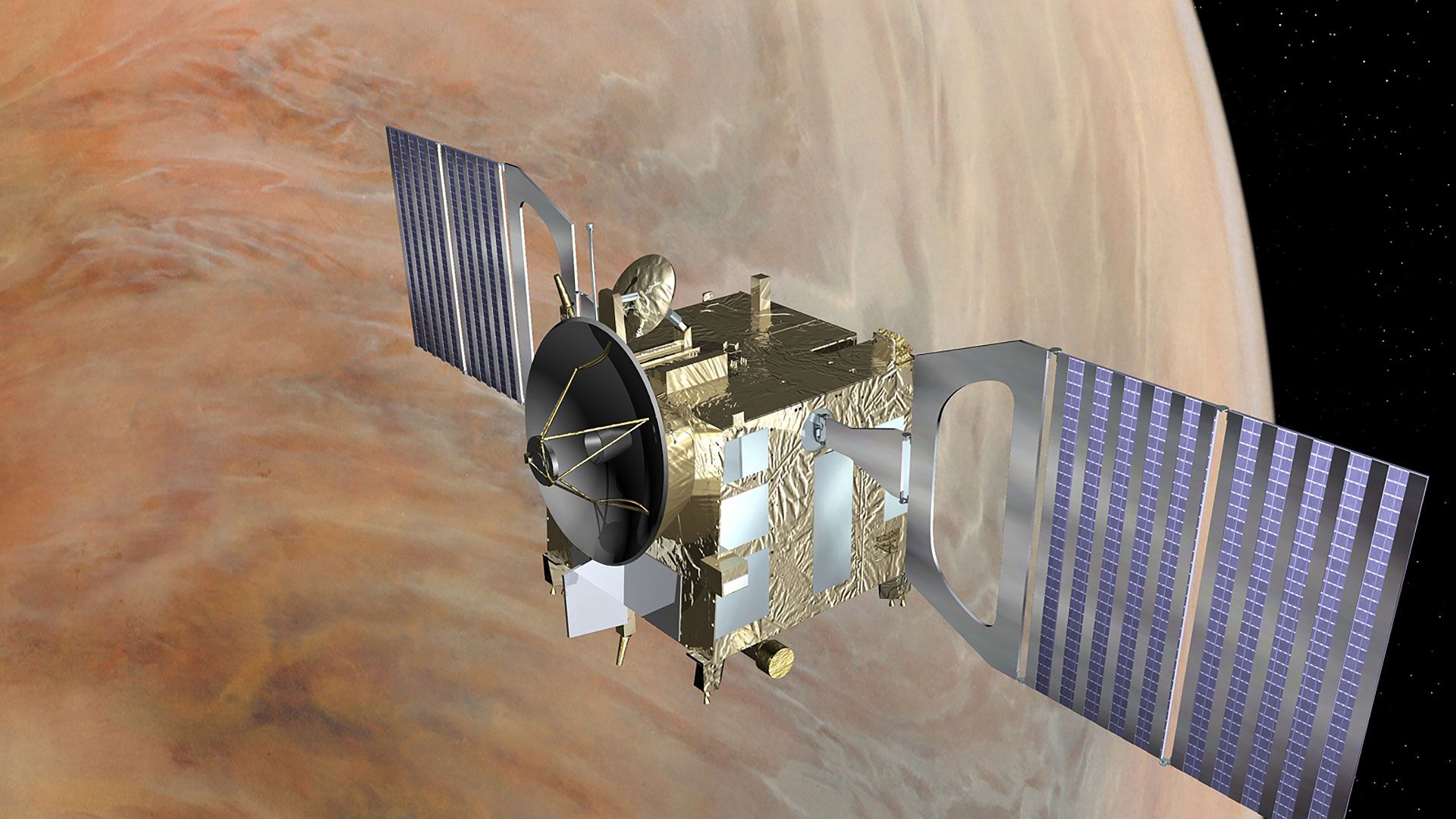
On This Day in Space: November 8, 2005 – Europe Launches Venus Express, Its First Journey to Earth's Twin
Space history was made on November 8, 2005, when the European Space Agency (ESA) officially embarked on its maiden voyage to our mysterious planetary neighbor. Blasting off from the Baikonur Cosmodrome in Kazakhstan aboard a Soyuz-Fregat rocket, the Venus Express spacecraft marked a monumental milestone for European space exploration as the continent's very first mission dedicated entirely to studying Venus.
Why Venus Express Mattered
Often referred to as Earth's "evil twin" due to its similar size and mass, Venus developed down a drastically different evolutionary path, turning into a runaway greenhouse nightmare. Before the arrival of Venus Express, scientists had many lingering questions about the planet's intensely hot surface, crushing atmospheric pressure, and the dynamics of its thick, sulfuric acid clouds.
Venus Express arrived at the shrouded planet in April 2006 and immediately went to work. Equipped with a suite of advanced scientific instruments, the spacecraft spent eight years conducting unprecedented global observations of the Venusian atmosphere, plasma environment, and surface characteristics. The mission successfully mapped temperatures in the southern hemisphere, discovered a curious double atmospheric vortex at the north pole, and even found evidence of lightning.
Legacy of Europe's First Venus Mission
By the time the mission officially concluded in December 2014—when the spacecraft intentionally ran out of propellant and plunged deeper into the Venusian atmosphere—Venus Express had revolutionized our scientific understanding of the planet. The invaluable data collected by ESA's trailblazing orbiter continues to inform planetary scientists today as humanity prepares for a brand-new era of Venus exploration in the coming decades.






0 Comments